Djibouti Football Team: A Historical Overview
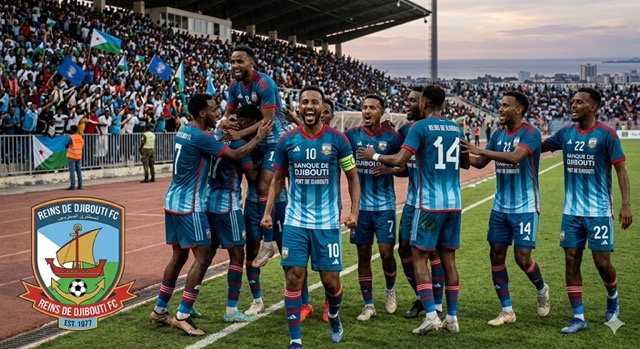
Djibouti Football Team: A Historical Overview
Pre-Independence & Colonial Era Roots (1940s–1977)
Contrary to common misconception, Djibouti’s football history predates its 1977 independence but not as a sovereign national team. From the late 19th century until 1967, the territory was known as French Somaliland; from 1967 to 1977, it was renamed French Territory of the Afars and the Issas (TAAF). During this colonial period:
Early Football Activities (1940s–1950s): football was introduced by French military personnel, sailors, and local elites. Matches were played informally among colonial settlers, foreign workers (particularly in the port city of Djibouti), and emerging local clubs like RCSA ( Racing Club de Saint-Loup) and USAD (Union Sportive de l’Arcadienne). These teams represented institutions not the colony itself.
The “1947 Match” Clarification: The oft-cited 5–0 loss to Ethiopia on December 5, 1947, was not an official national team fixture. It was a colonial regional selection—often called "Équipe de French Somaliland" composed of expatriate and local players organized ad hoc for (friendship) tournaments or exhibition matches. International football governance (FIFA/CAF) did not yet recognize non-sovereign territories as national teams, so this match holds no official record in FIFA standings.
Local Development: Despite limited infrastructure, local leagues flourished in Djibouti City and Ali Sabieh. Clubs such as ASDJ (Association Sportive DJIBOUTI), founded in the 1960s, became dominant forces. The first national championship (Championnat Territorial) was formalized in the early 1970s under colonial administration.
Independence & Federation Formation (1977 onward)
- Djibouti gained full independence on June 27, 1977. However, the Djiboutian Football Federation (Fédération Djiboutienne de Football – FDF) was not established until 1979, reflecting post-independence institutional consolidation.
Affiliation & International Integration
⁃ CAF Admission: 1986 — enabling participation in Africa Cup of Nations (AFCON) qualifiers.
⁃ FIFA Membership: 1994 — after years of efforts to meet technical and organizational criteria.
⁃ Note: Djibouti missed the 1982, 1986, and 1990 AFCON qualifiers due to political instability and limited resources.
International Breakthroughs & Milestones
⁃ World Cup Debut: Entered FIFA World Cup qualifiers for the first time in 2000, competing for the 2002 tournament (against DR Congo: 2–1 loss in Djibouti City, 3–0 loss in Kinshasa).
⁃ First Official Victory: While the 1–0 win over Somalia in 2010 is widely reported, Djibouti actually secured its first FIFA-recognized win earlier: a 2–0 victory over Seychelles on June 13, 2007, during CECAFA Cup Group Stage play (classified as an official senior international by FIFA).
⁃ AFCON Highlights: Never qualified for the finals, but came closest in 2012 qualifiers, reaching the second round after beating Ethiopia on aggregate in the first round a historic upset (though later disqualified due to an ineligible player).
Recent Progress & Challenges
⁃ Qualifying Resurgence: In the 2022 World Cup qualifiers, Djibouti stunned Eswatini with a 2–1 home win and forced a hard-fought 0–0 draw in Manzini advancing to Round 2 for the first time ever (they were eliminated by Guinea in Round 2).
⁃ Regional Play: Regularly competes in CECAFA Cup, Arab Cup of Nations (UAFA), and Maghreb Cup. Notably finished *third* in the 2018 CECAFA Cup—their best regional performance to date.
⁃ Ongoing Hurdles:
⁃ Infrastructure: Over-reliance on the Stade du Ville (Djibouti City), which lacks floodlights, proper drainage, and seating for international standards. New Stade National in Balbala (inaugurated 2023) offers hope.
⁃ Economics: Limited funding forces reliance on diaspora players (especially in France), short preparation windows, and occasional withdrawals from qualifiers (e.g., 2019 AFCON).
⁃ Ranking: Long ranked among the lowest by FIFA (hit a low of #205 in 2018); improved to #173 as of 2024 a testament to recent consistency.
Looking Ahead
With youth academies emerging in Djibouti City, increasedCAF support, and homegrown players like captain Mohamed Ahmed Ali (ASDJ), the future appears more promising. While qualification for AFCON or World Cup remains ambitious, Djibouti’s football journey from colonial exhibition sides to resilient qualifiers marks a quiet but determined evolution.
0 comments
Leave a comment